Smart Water Management System
Duration: 11 months
Team: Four computer engineering students
My role: Hardware, PCB, mechanical design, and integration
Technologies: ESP32, MQTT, SQL, C++, EasyEDA, CAD
Water leaks, pipe blockages, and abnormal pressure conditions can cause significant damage before building managers become aware of them. Our goal was to develop a distributed monitoring system capable of detecting these conditions, automatically shutting down the water supply when necessary, and presenting live and historical system data through a centralized dashboard.
I led the physical implementation of the prototype, including schematic development, PCB layout, component selection, pump-control circuitry, sensor integration, mechanical mounting, and final system assembly. I also contributed to firmware development, MQTT debugging, testing, and preparation of the final demonstration.

System Architecture
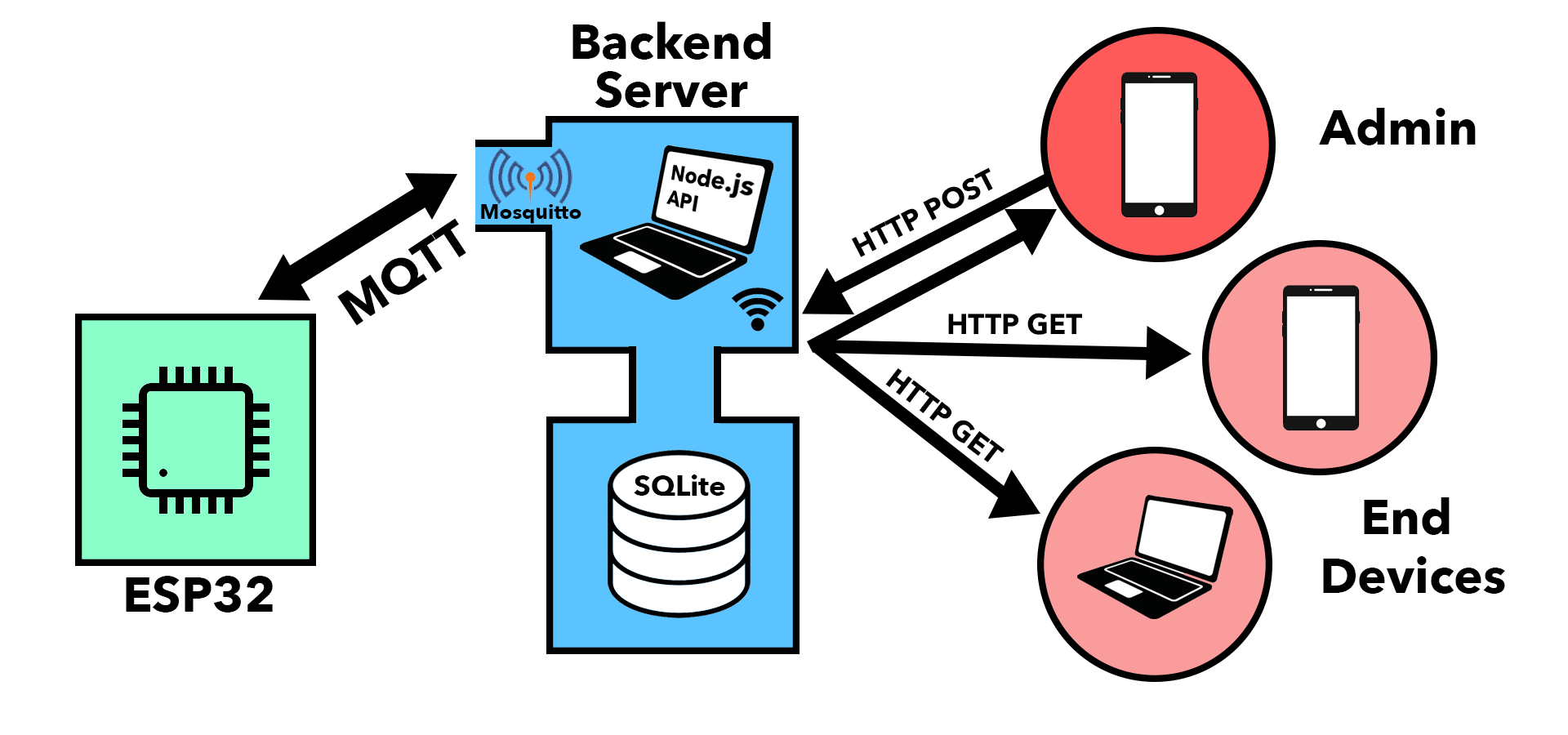
The system connected ESP32 monitoring and control hardware to a centralized web dashboard using MQTT. A Node.js backend processed messages, stored sensor data in SQLite, and provided live and historical data to the React dashboard through a REST API.
Custom PCB
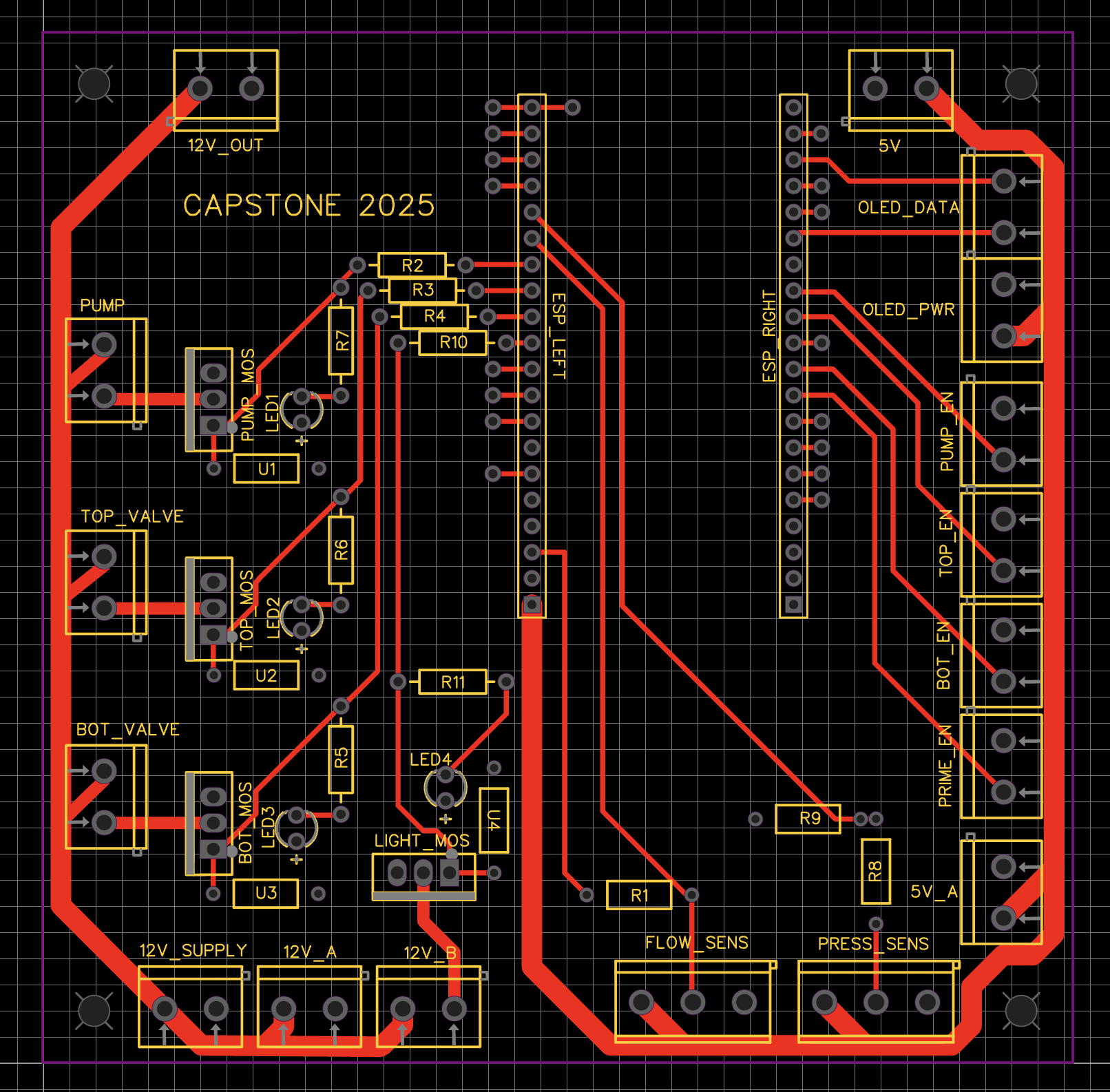
I designed the custom PCB to consolidate sensor interfaces, motor-control circuitry, power distribution, and the ESP32 development board onto a compact 100 × 100 mm board. The size constraint reduced fabrication cost while maintaining removable headers, accessible test points, and spare GPIO connections for future expansion.
- Designed in EasyEDA and fabricated by JLCPCB
- Removable female headers allowed the ESP32 development board to be replaced during debugging
- Exposed unused GPIO pads for future sensors and expansion
- Integrated NMOS motor-control circuitry and a continuous ground plane
- Identified future revisions including reverse-polarity protection and improved power-supply transient filtering


Mechanical Design & Prototyping
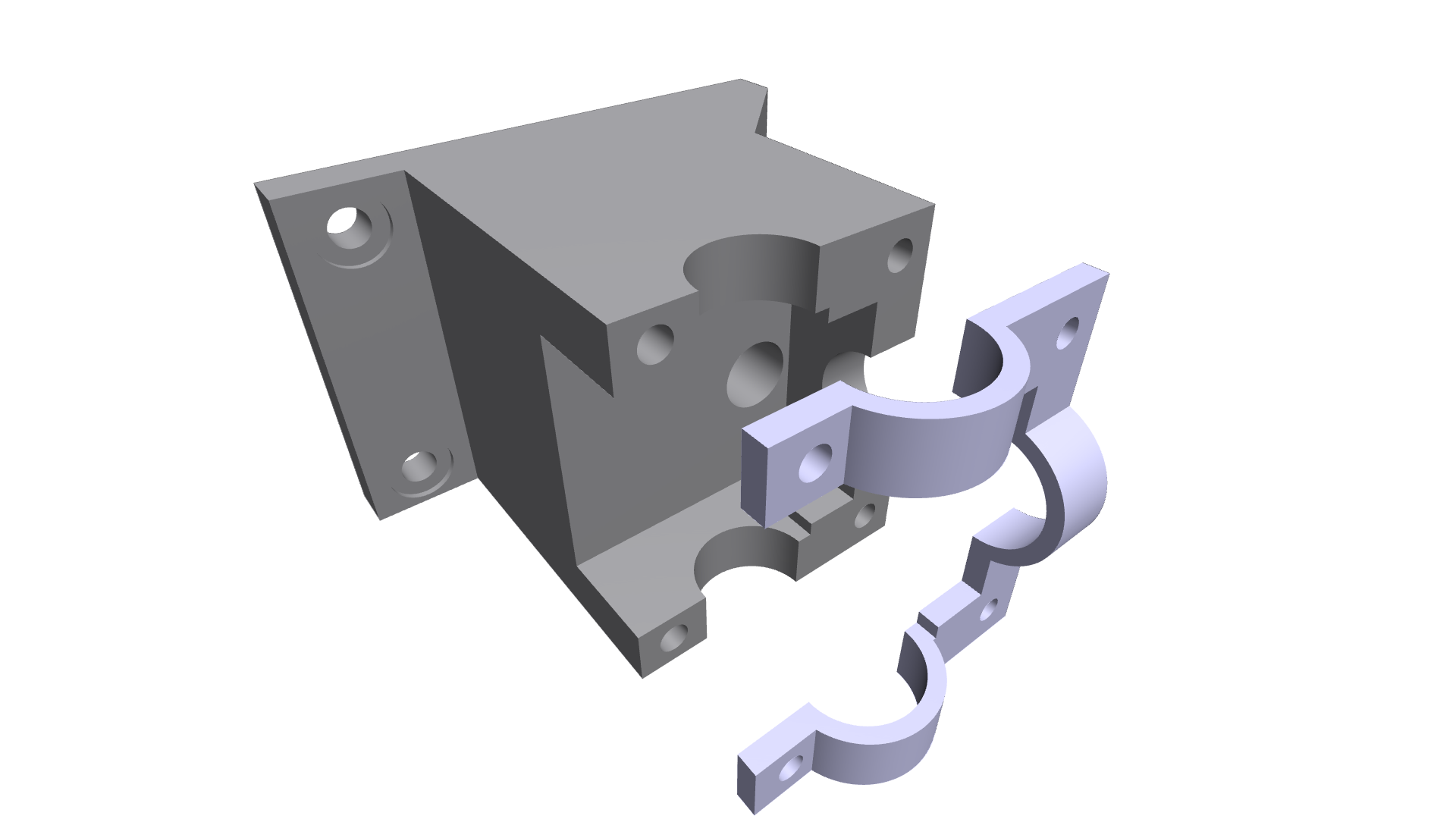
Functional 3D-printed components were used throughout the prototype to mount tubing, valves, sensors, and electronics to the plywood backboard. I designed more than 20 custom parts, including reusable pipe clamps that used machine screws to securely retain the tubing while still allowing components to be removed during testing.


Design
One of the challenges for this project was to secure a centrifugal pump submerged underwater, within a 5L container made of acrylic. Using the properties of different materials, I was able to create a "donut style" inspired design for the pump to sit on.
- Offset cavities between acrylic layers for bonding
- 0.1mm tolerance between layers to reduce rattling
- Stainless steel screws to prevent rusting
- Asymmetric fastener placement was used to avoid creating a highly uniform vibration path through the assembly
____
This animation was also created by myself using Blender
Firmware
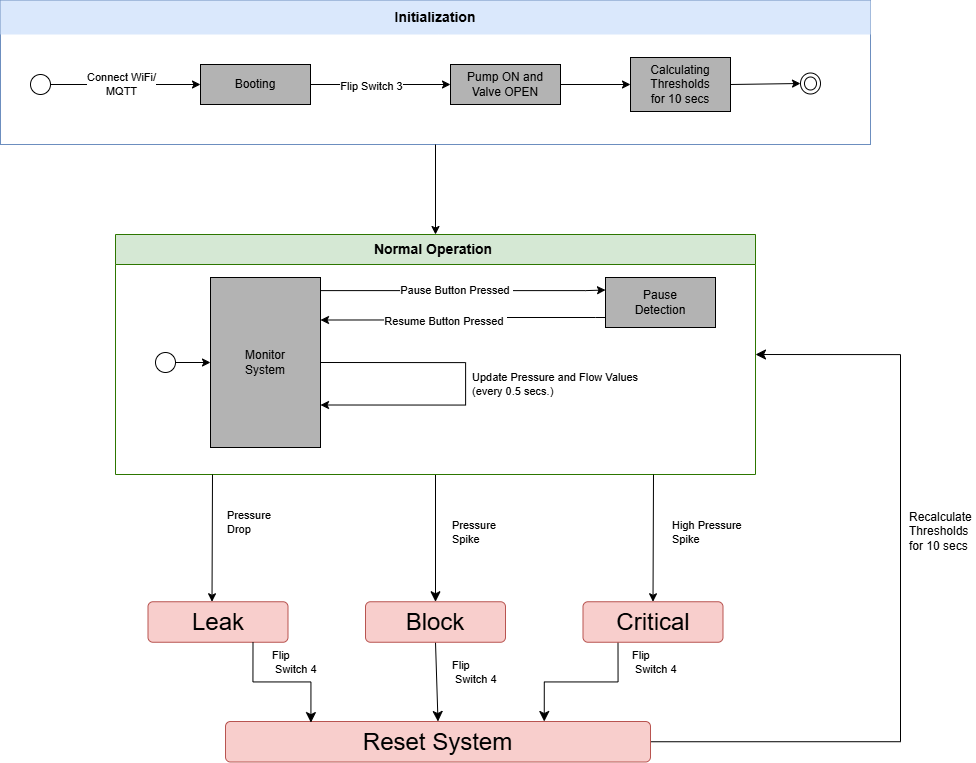
Firmware running on each ESP32 continuously sampled flow and pressure sensors, evaluated fault conditions, controlled the pump and shutoff hardware, and published system data over MQTT. The control logic was designed so safety-critical conditions could be detected independently of dashboard communication.
- MQTT provided lightweight local publish/subscribe communication between distributed nodes and the central system
- Sensor readings and calculated values were stored in a local SQL database for historical analysis and water-usage tracking
- Fault-handling logic covered abnormal pressure, flow loss, suspected leaks, and other critical operating conditions
- Non-blocking timing using millis() allowed sensor monitoring, actuator control, and MQTT publishing to operate concurrently without long blocking delays.
- A future revision would use FreeRTOS tasks to provide clearer separation between sensing, communications, control, and fault handling.
User Dashboard
A centralized dashboard provided building managers with live system status, sensor measurements, alarms, and historical trends. Data from the distributed ESP32 nodes was transmitted over MQTT and stored in SQL, allowing both real-time monitoring and longer-term analysis.
- Sensor values were refreshed approximately every 500 ms, providing responsive visualization without unnecessarily increasing database and network traffic
My Team
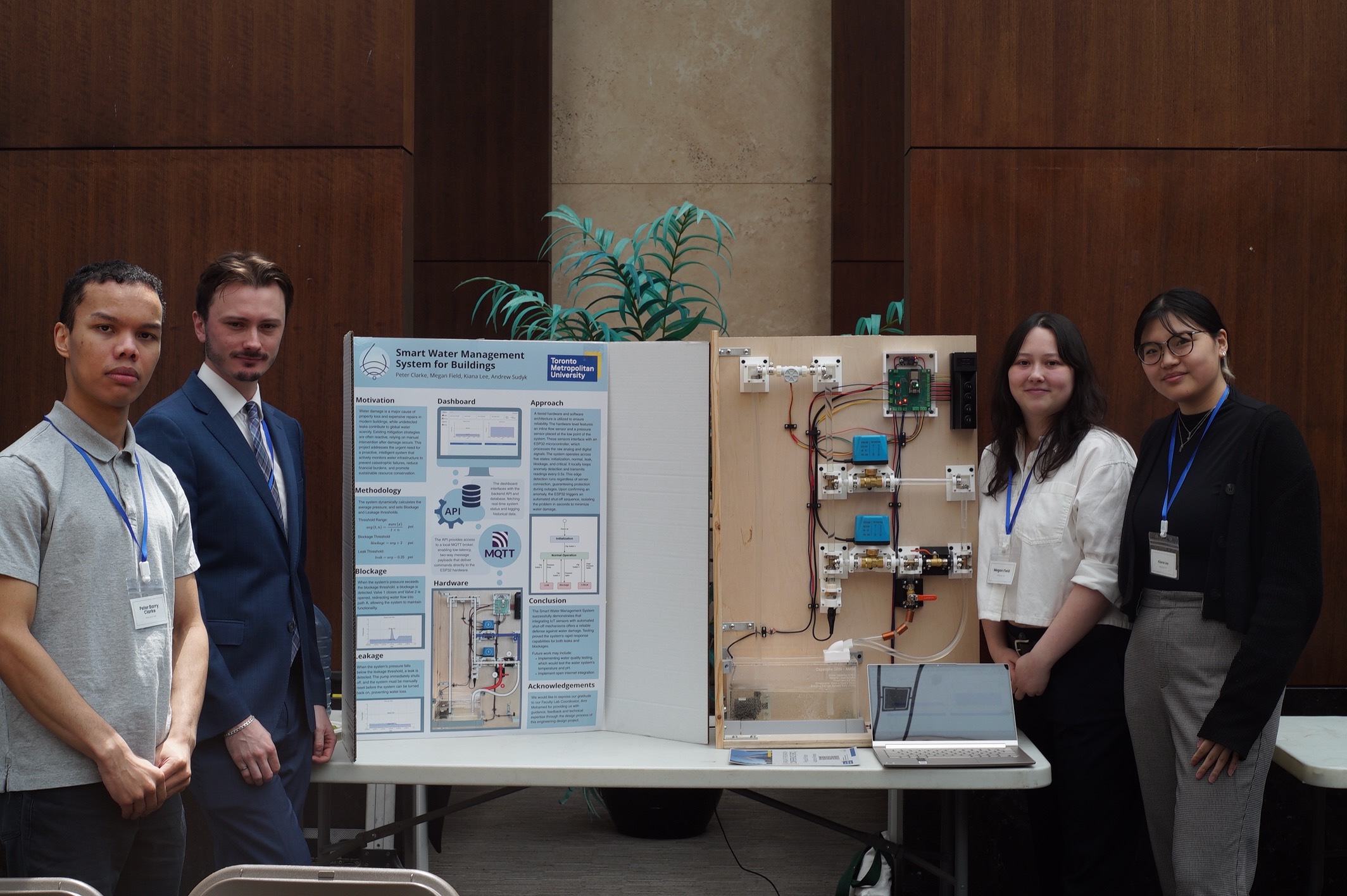

This project was the result of close collaboration between four computer engineering students, with each team member contributing across different areas of the system
For a deeper technical breakdown, our revised 50-page engineering report documents the complete system architecture, design process, testing, and results.